Home Lab Projects That Impress Employers
A well-designed home lab is more than a playground for curiosity. It is tangible proof that you can design systems, solve problems, and learn independently. For employers in IT, cybersecurity, cloud, and DevOps, home lab projects often carry as much weight as formal experience because they demonstrate how you think, not just what you know.
Table of Contents
- Why Home Lab Projects Matter to Employers
- Building a Strong Home Lab Foundation
- Virtualization and Infrastructure Projects
- Cloud and DevOps Home Lab Projects
- Cybersecurity and Blue Team Projects
- Advanced Networking and Automation Projects
- Data, Monitoring, and Observability Projects
- How to Document Home Lab Projects for Employers
- Common Home Lab Mistakes to Avoid
- Top 5 Frequently Asked Questions
- Final Thoughts
- Resources
Why Home Lab Projects Matter to Employers
Employers increasingly value demonstrated ability over credentials alone. According to hiring surveys from LinkedIn and Gartner, hands-on experience and problem-solving rank among the top evaluation criteria for technical roles. A home lab shows initiative, persistence, and applied understanding. From an innovation and technology management perspective, home labs reflect learning agility. Employers know tools change quickly. What stays relevant is your ability to experiment, fail safely, and iterate. A thoughtful lab also mirrors real-world constraints such as limited resources, security tradeoffs, and uptime requirements.
Building a Strong Home Lab Foundation
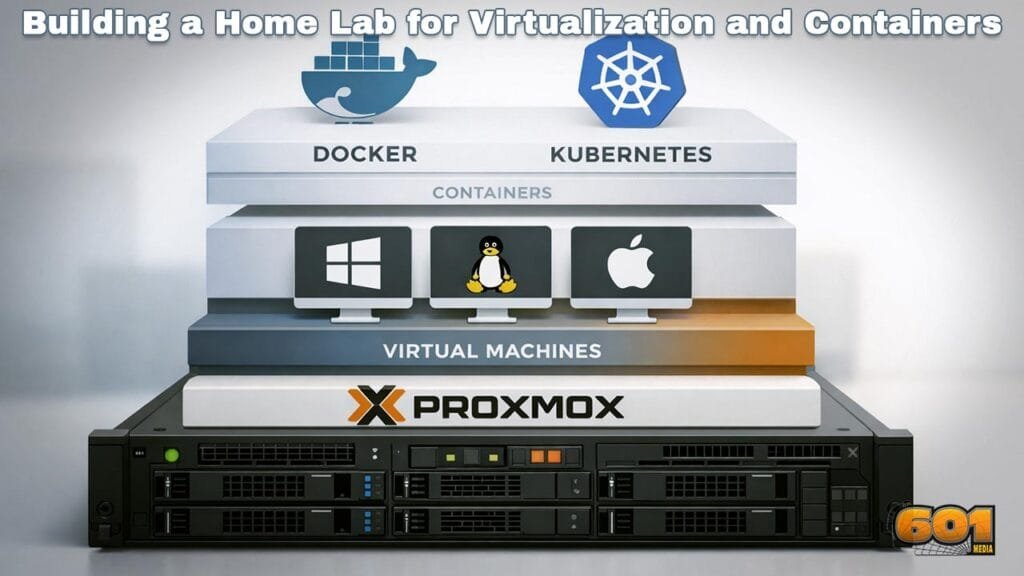
Before diving into advanced projects, your home lab needs a solid foundation. This is where many candidates quietly impress interviewers. A strong base usually includes a modest server or repurposed hardware, virtualization software, and structured networking. Employers are not impressed by expensive gear. They are impressed when you can explain why you chose specific components and how you optimized them. Key foundational elements include a hypervisor such as Proxmox or ESXi, segmented virtual networks, and centralized authentication. Documenting your design decisions matters as much as the build itself.
Virtualization and Infrastructure Projects
Virtualization projects are often the first signal to employers that you understand infrastructure fundamentals. One standout project is building a multi-VM environment with role separation. For example, deploying a directory services server, an application server, and a database server on isolated networks demonstrates architectural thinking. Another impressive project involves high availability. Configuring failover between two hypervisors using shared storage or replication shows understanding of uptime, redundancy, and risk management. Employers immediately recognize the relevance because these are daily enterprise concerns. Adding infrastructure-as-code elevates the project further. Using tools like Terraform to recreate your environment from scratch highlights automation, reproducibility, and discipline.
Cloud and DevOps Home Lab Projects
Cloud fluency is no longer optional in many roles. Home labs that bridge on-premise and cloud environments stand out. A strong example is building a hybrid environment where on-prem virtual machines connect securely to a cloud VPC. This demonstrates networking, identity integration, and security awareness. Another employer-friendly project is a full CI/CD pipeline. Hosting code in GitHub, building with automated tests, containerizing applications, and deploying them to a local Kubernetes cluster mirrors modern DevOps workflows. Running Kubernetes locally, even at small scale, signals that you understand container scheduling, service discovery, and configuration management. Employers care less about cluster size and more about your ability to explain pod networking, scaling, and failure scenarios.
Cybersecurity and Blue Team Projects
Cybersecurity-focused home labs are especially impressive because they show defensive thinking, not just tool usage. One high-impact project is building a centralized logging and SIEM stack. Collecting logs from servers, firewalls, and applications, then creating meaningful alerts, demonstrates operational security skills. Another valuable project involves simulated attacks. Intentionally exploiting a vulnerable service and then detecting and mitigating the attack shows you understand both offense and defense. Employers value this balanced perspective. Implementing role-based access control, certificate-based authentication, and regular patching schedules also highlights maturity. These are practices often missing in junior candidates.
Advanced Networking and Automation Projects
Networking projects separate surface-level knowledge from real competence. A lab featuring VLAN segmentation, routing between networks, and firewall rule optimization shows deep understanding of traffic flow. Adding site-to-site VPNs or zero-trust principles further strengthens the project. Automation adds another layer of impact. Using configuration management tools to deploy and maintain network devices demonstrates scalability thinking. Employers see this as evidence you can manage growth without chaos. Network documentation, including diagrams and traffic explanations, is critical here. Clear communication is a core skill in technology leadership roles.
Data, Monitoring, and Observability Projects
Modern systems live or die by observability. Home labs that include monitoring and performance analysis stand out immediately. A strong project involves deploying metrics collection, dashboards, and alerting for your entire lab. Tracking CPU, memory, network latency, and application response times shows operational awareness. Employers are especially impressed when candidates can explain how monitoring data influenced design changes. For example, resizing resources or tuning applications based on observed bottlenecks demonstrates data-driven decision-making. This aligns closely with technology management principles, where insight leads strategy rather than guesswork.
How to Document Home Lab Projects for Employers
A powerful home lab loses impact if it is poorly documented. Documentation is where many candidates fail. Each project should include a clear objective, architecture overview, setup steps, and lessons learned. Employers want to see reflection, not just screenshots. Hosting documentation publicly, such as in a repository or personal site, makes it easy for hiring managers to explore your work. Clear writing signals professionalism and readiness for collaborative environments. Including diagrams, decision rationales, and future improvement ideas turns your lab into a living portfolio rather than a static experiment.
Common Home Lab Mistakes to Avoid
One common mistake is overbuilding without understanding. Employers quickly spot labs filled with buzzwords but lacking clear explanations. Another pitfall is ignoring security. Default passwords, exposed services, and outdated software suggest poor habits, even if the project is technically complex. Finally, many candidates fail to connect projects to business value. Employers care about reliability, cost control, and scalability. Explicitly linking your lab work to these outcomes makes your experience far more compelling.
Top 5 Frequently Asked Questions
Final Thoughts
Home lab projects impress employers when they demonstrate thoughtful design, practical problem-solving, and continuous learning. The most effective labs are not about showing off tools. They are about showing judgment. From an innovation and technology management lens, your home lab is evidence that you can experiment responsibly, learn quickly, and translate technical decisions into operational value. When documented clearly and aligned with real-world challenges, a home lab becomes one of the strongest assets in your career portfolio.
Resources
- LinkedIn Global Talent Trends Report
- Gartner IT Skills and Hiring Research
- Google SRE Book
- Kubernetes Official Documentation
- Terraform Documentation

I am a huge enthusiast for Computers, AI, SEO-SEM, VFX, and Digital Audio-Graphics-Video. I’m a digital entrepreneur since 1992. Articles include AI researched information. Always Keep Learning! Notice: All content is published for educational and entertainment purposes only. NOT LIFE, HEALTH, SURVIVAL, FINANCIAL, BUSINESS, LEGAL OR ANY OTHER ADVICE. Learn more about Mark Mayo